

No Guest Found in this category
˃ CONTINUE
NEW GAME
EXIT
Welcome to the exciting world of Pokémon! Thirty years ago, a generation of children took their first curious steps into that wonderful world and many of them never left. For what they discovered was a world full of wonder, excitement and adventure; a world not unlike our own.
This world however was populated by creatures of amazing power, creatures who were just waiting to be our friends, ready to battle by our side on our journey to become the very best, like no-one ever was.
This was a world where a child could defeat entire criminal organisations; where unlike in our world, evil could be conquered through hard work, a strong heart and the bonds of friendship. This was the world of Pokémon.
The origins of Pokémon can be traced back to a little boy named Satoshi Tajiri who spent his summers collecting insects in the wilderness around the suburbs of Tokyo. In 1983 as a 17-year-old studying electrical engineering, Tajiri began self-publishing a magazine called Game Freak, dedicated to one of his other loves – video games.
He would later be joined by artist Ken Sugimori, composer Junichi Masuda and others and by 1989 this humble little student magazine had evolved into a video game development team.
While finding initial success with the puzzle game Quinty, Tajiri was inspired by the announcement of Nintendo’s Game Boy to develop a pair of games that would centre on collecting and trading creatures.
Learning that two Game Boys could be connected via a link cable, he reasoned that objects could then be traded from one game cartridge to another. Harkening back to his boyhood days of catching insects, he and the Game Freak team envisioned a pair of games centred on catching creatures of varying rarity, where players could use the link cable to trade with other players.
Fast forward to the 27th of February, 1996 and Pocket Monsters Red and Green were released in Japan to little fanfare. However, the games would slowly gain momentum over the coming months, which was bolstered by the release of the first Pokémon Trading Card Game set in October of 1996.
In April of 1997 the Pocket Monsters anime hit Japanese airwaves, and it was this branch of the franchise that would lead Pokémon’s charge into the United States, and the rest of the world.
Remember, this was at a time when anime and Japanese media in general were only a very niche interest in the Western world. However, Minoru Arakawa of Nintendo of America and Alfred R. Kahn of 4Kids Entertainment were two early supporters who saw Pokémon’s potential for the North American market.
Arakawa spent years trying to take Red and Green to the States, going so far as to commission redesigns of Pokémon in response to concerns that they were too cute and not cool enough for American children, but to no avail.
However, Arakawa still put all his might behind Pokémon’s American launch, and Kahn went so far as to finance the localisation of the anime himself, and offered the series to broadcasters for free after most proved reluctant to buy it.
He was also the man responsible for coining the franchise’s name for the English-speaking world: Pokémon. Arakawa and Kahn put their hearts, souls and money into giving Pokémon the biggest American launch it could hope for, and in late 1998 it all came to a head.
 The Pokémon anime made its American debut on the 7th of September, followed by Pokémon Red Version and Blue Version on the 28th of September. Finally, the Pokémon Trading Card Game hit American shores on the 9th of January, 1999.
Great efforts had been made to localise the franchise to appeal to American children, but in the end everyone who had worked so tirelessly to take Pokémon to America could only sit and wait. Would the children of America want to catch ‘em all?
The answer was a resounding ‘yes’ and as the 20th century drew toward an end, there was no doubt that America was gripped by Pokémania. The popularity of the anime led to a bidding war between Warner Bros. and Saban Entertainment, which was won by the former, resulting in Ash and Pikachu finding a new home on the Kids WB Saturday morning and after school programing block, commencing on the 13th of February, 1999.
This was a far cry from the early morning weekday slots it had previously been relegated to, and proved to be a massive boon for Kids WB, with Pokémon helping the programing block to dominate the ratings.
Meanwhile, kids were going crazy for Pokémon merchandise, especially the Trading Card Game, with shops experiencing massive stock shortages and delays on backorders, while the game’s American publisher, Wizards of the Coast, struggled to meet production needs.
The writing was on the wall: Pokémon was destined to be one of the biggest generation-defining phenomena of the 1990s. Of course, like all crazes, Pokémania did gradually die down by the early days of the new millennium, however the Pokémon journey was far from over. There was a whole generation of kids who would never truly give up on chasing their dream of becoming a Pokémon master.
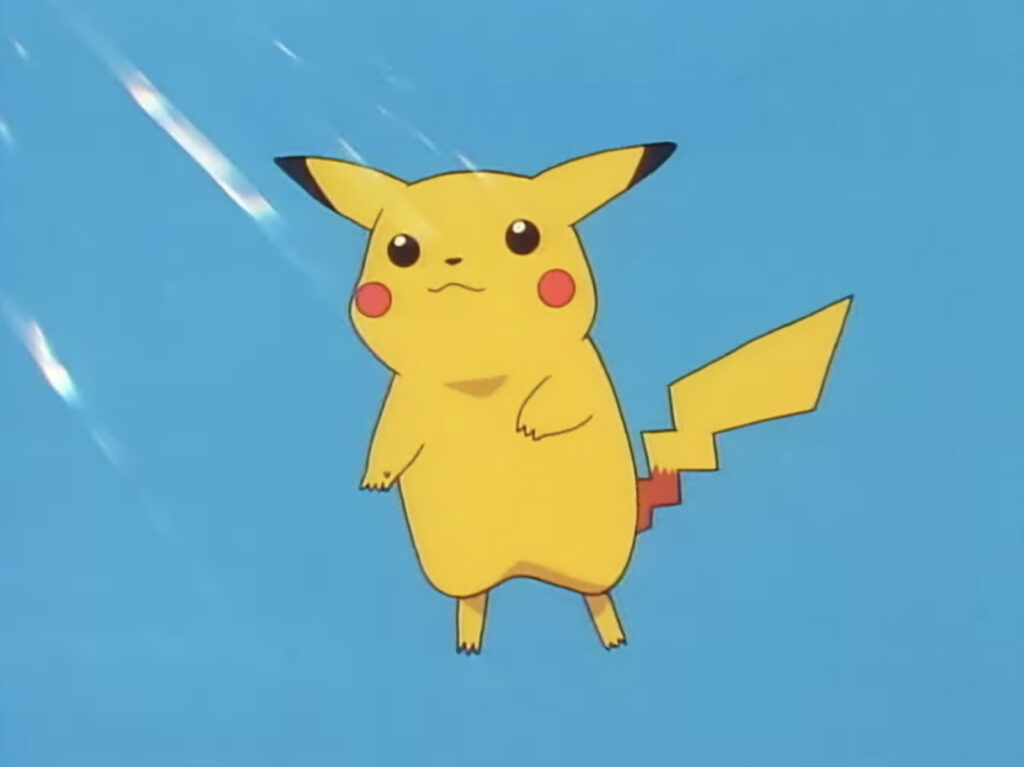 The fact that Pokémon is still such a dominant franchise thirty years later attests to some innate quality within it that resonates across generational divides. While the franchise has experienced peaks and troughs, as all franchises do, Pokémon has never gone away and Pikachu sits with the likes of Mickey Mouse and Bugs Bunny as one of the most recognisable mascots in media history.
Over the years, Supanova has hosted a slew of voice acting favourites from the franchise including Veronica Taylor, Eric Stuart, Sarah Natochenny, Anjali Kunapaneni and more, and Supa-Fans can’t seem to get enough.
Game Freak has been developing new entries in the video game series with great consistency for thirty years, both for the mainline games, and with a wide range of spin-offs. There have been nine generations of Pokémon games to date, developed across a wide range of Nintendo consoles, with the series constantly evolving to embrace new technologies, mechanics and trends in gaming.
And of course, with each exciting new evolution in the video game series, a whole new batch of Pokémon have been introduced to the franchise. Starting off with 151 Pokémon in the original games, the current count stands at a whopping 1025, ensuring that even the most ardent Pokémon Master will never be done catching them all.
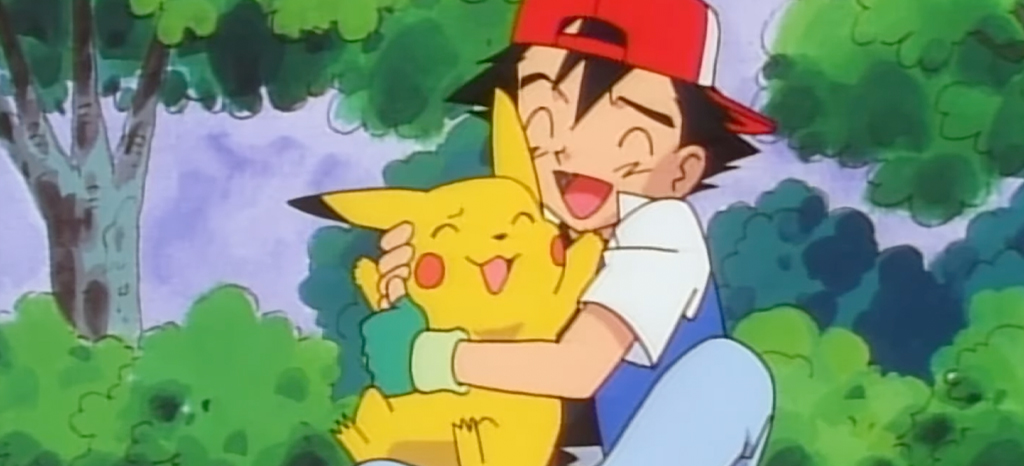
Then of course we can’t forget the impact of the anime. Multiple generations of kids grew up with Ash and Pikachu as the boy from Pallet Town embarked on his quest to become a Pokémon Master. So much so that when Ash achieved the impossible and became World Champion in 2023, it made headlines and was met with raucous cheers from fans around the world who had followed Ash’s journey every step of the way.
And when it was announced shortly after that Ash’s journey would be continuing off-screen, with a new set of protagonists replacing him in the anime, fans felt a mixture of grief and pride. What other ‘90s cartoon is still capable of eliciting such heightened emotional responses from grown adults?
For those who had been there every step of the way, perhaps they’d always seen a bit of themselves in Ash, and to see that perpetual symbol of childhood finally achieve his dreams, well, how could that not resonate?
Oh, and it would be remiss not to mention the Pokémon anime without mentioning that iconic original theme song. Gotta Catch ‘Em All, or typically just called ‘the Pokémon theme song’ (despite the series having well over twenty theme tunes at this point) is ingrained into the hearts and minds of ‘90s kids the world over.
If you start playing it in public, it’ll only be a matter of seconds before you get random Millennials belting out, ‘I want to be the very best, like no-one ever was!’ It’s not an exaggeration to call it the anthem of a generation.
And let’s not forget the Trading Card Game, which is more popular now than ever. Pokémon cards are some of the most sought-after collectables in the world, there’s an entire community (or perhaps industry is the better word) centred around their collection. The opening of a pack of cards can be treated like a religious event, performed for audiences in person or online.
At any given Supanova event you are guaranteed to see dozens of dealers proudly displaying their collections for eager trainers searching for their most desired cards. And then there’s the competitive side, which is just as high-stakes as any major sporting event, complete with an annual World Championship where the best players in the world duke it out.
This competitive component, which is ingrained into the franchise’s very DNA is also a major factor in the world of the Pokémon video games, both on consoles and for lovers of the most recent string to be added to the franchise’s bow: Pokémon Go.
This addictive AR mobile game was released during the franchise’s 20th anniversary year, 2016, and allowed lifelong fans to achieve their dreams of setting out to catch Pokémon in the real world. The release of Pokémon Go ushered in a new wave of Pokémania, with millions of adults who hadn’t thought of Pikachu for a decade or more, grabbed their phones and raced out to become Pokémon Masters.
Perhaps more than any other branch of the franchise, Pokémon Go has had some pretty positive effects, encouraging players to connect with one another, and compelling them to get out into the world for some fresh air and exercise. And while this second wave of Pokèmania too did fade away, Pokèmon Go has maintained its own dedicated community who still gather for virtual and in-person events around the world.
So, what is it that makes Pokémon so popular even after thirty years? Maybe it all harkens back to that little boy collecting insects all of those decades ago. Maybe Satoshi Tajiri managed to craft a world that perfectly captures that spirit of childhood innocence; of endless summer days exploring nature and our own curiosity.
Maybe it’s the social aspect, the sense of competition or the drive to collect and trade, all of which have been at the heart of the franchise from the very beginning. Or maybe for fans of a certain generation it’s just a comfortable reminder of a simpler, happier time.
For those who have been there from the beginning and grown with the franchise, Pokémon has been a constant in an ever-changing and uncertain world. As a generation that has faced global upheaval and no shortage of anxiety and uncertainty, perhaps there’s just something reassuring about the pure and simple goal of trying to catch ‘em all.
Whenever we feel powerless and afraid in the real world, it’s nice to know we can escape into a simpler place where we can still be the very best, like no-one ever was.