
Adelaide
Oct 30 - Nov 1, 2026
Adelaide Showground


Zach Cregger has made a Resident Evil movie, but he wasn’t particularly interested in making the Resident Evil movie we’ve already seen.
The director behind Barbarian and Weapons has approached Capcom’s survival-horror franchise with an original protagonist, a story built around one chaotic night, and a clear love for the second and fourth games in the series. The result looks less like a conventional adaptation and more like Cregger being given the keys to the Resident Evil toy box.
Austin Abrams plays Bryan, a medical courier thrown into the middle of the nightmare. It’s his second collaboration with Cregger after Weapons, and the two have developed a shorthand that carries over into their latest film.
In a conversation with Supanova, they discuss their reunion, Cregger’s approach to Resident Evil, and why the increasingly blurred line between video games and cinema could produce some exciting things in the years ahead.
When asked what each brought to the other’s world, Abrams is quick to credit Cregger’s admiration for the source material.
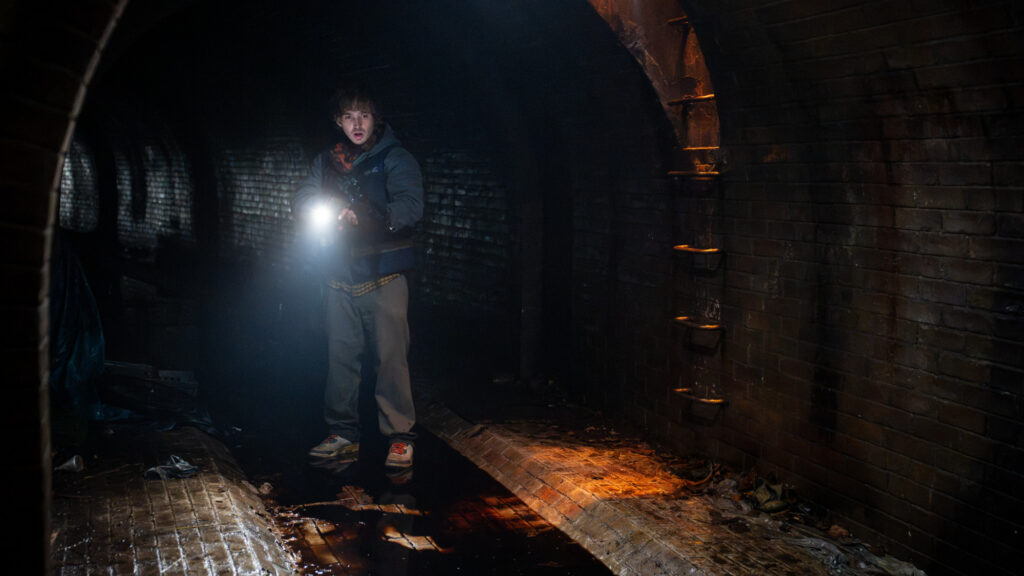
Austin Abrams stars in ‘RESIDENT EVIL’, directed by Zach Cregger. Photo by Dušan Martinček
“I felt like I was in good hands because he’s a true lover of the game,” Abrams says. “I really wouldn’t have done it if he wasn’t genuinely passionate about it. I knew he was going to bring his own artistic voice and ideas to it. That was really important, to make it fresh. I feel he brought his love to it. He wanted to keep the essence of it, but then also brought his creativity, which is what I love so much about what he does.”
Cregger looks over at Abrams and says, “Thanks, man!” Returning the compliment, Cregger describes Abrams as something close to a cheat code.
“I feel like Austin has kind of a superpower,” Cregger tells. “He’s a truly amazing actor. I think he’s spectacular. But he has this quality that no matter what he does, people just instantly root for him.”
Cregger points to their previous film together as proof. In Weapons, Abrams played a deeply flawed character – a thief and addict out for himself and willing to sell information about missing children.
“And yet the audience is in love with him all the way through,” Cregger says. “I’m lucky to be able to have this guy on screen, it’s like I’m playing with loaded dice. I’m already in the end zone.”
“We have the same sensibility,” Abrams explains. “Zach’s humour makes me laugh because it’s so sharp. I really love his work because in one moment Zach can freak you out, and a second later, make you laugh. It’s his kind of flavouring.”
Cregger agrees. “I don’t have to ever explain anything to [Austin] too much. There’s a shorthand that we developed on Weapons that we were able to harness into this. And it’s lucky for me. It worked out!”
Cregger also sees the film as part of a changing relationship between games and cinema.
“I think games are so captivating, they’re so prevalent, they’re so immersive.” He pauses, then looks ahead with anticipation. “I mean, what’s going to happen when GTA 6 comes out? It’s going to open up this whole new world of possibilities, things we’re going to see on screen that we’ve never seen before. I think it’s great.”
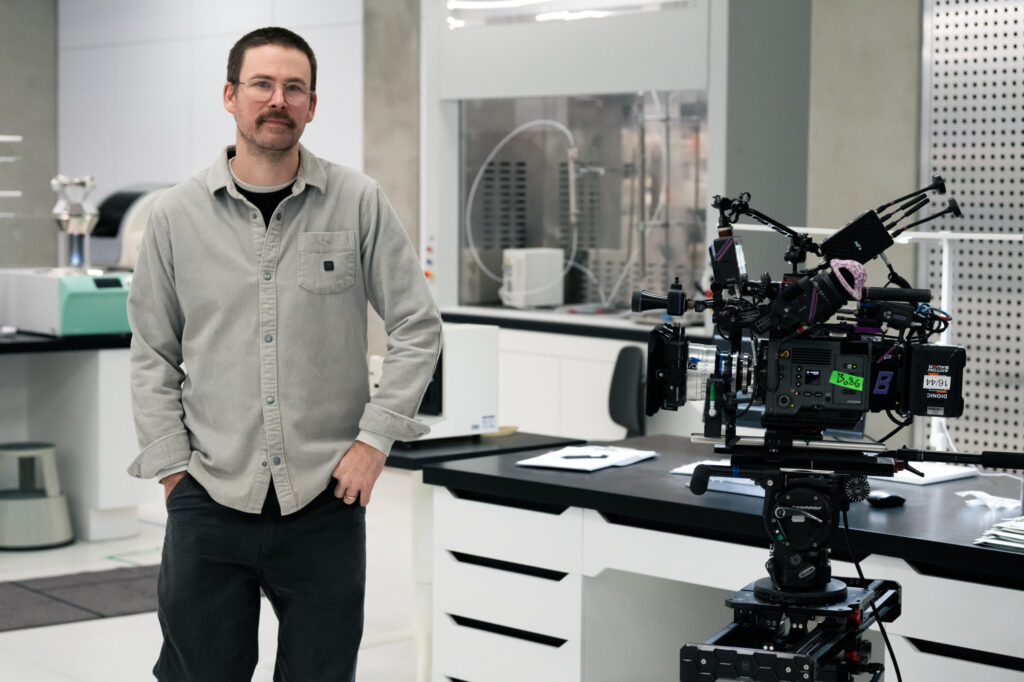
Director Zach Cregger on the set of ‘RESIDENT EVIL’. Photo by Dušan Martinček
Cregger continues: “I think games are pioneering a lot. I also think movies are still continuing to pioneer lots of things in terms of just the weird kind of stories that we’re telling now that you haven’t seen before. So, it’s cool that these two mediums are interacting the way they are.”
From what we saw of Resident Evil, that approach is already apparent: this isn’t simply a film borrowing the games’ imagery, but one attempting to capture what made them distinctive.
But what if Capcom were to reverse-engineer his movie and turn it back into a game? Which entry in the series would it most resemble? Cregger’s answer is immediate: “It would be closer to the world of two,” he says, “but it would have more of the rhythm of four.”
Resident Evil 2 is remembered for its iconic Raccoon City setting, while Resident Evil 4 brought a faster pace and sharper action that helped redefine the series. Cregger’s film seems to sit between the two.
He adds, “Four is the one that I’ve played the most. It’s the nearest and dearest to my heart. I love how big it is. I love how it doesn’t take itself too seriously.”
From what we were shown, the film appears to be packed with Easter eggs, but Cregger’s approach to them says more about the tone than the references themselves. “If you’ve played the games a ton, you won’t be able to help but notice some of the healing spray cans and some of the green herbs,” says Cregger.
Resident Evil will infect cinemas around Australia on September 17th.
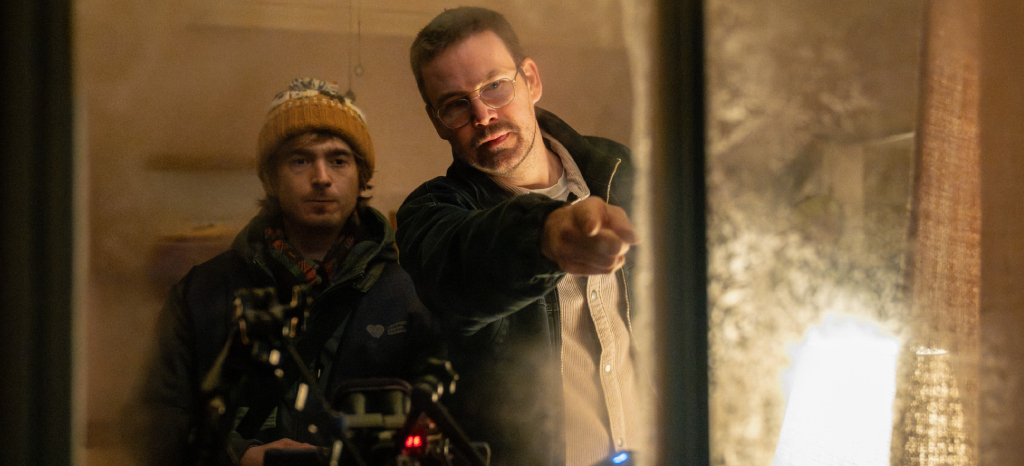
LEAD IMAGE: Director Zach Cregger and Austin Abrams on the set of ‘RESIDENT EVIL’. Photo by Dušan Martinček